When we look at someone’s face, we don’t evaluate each feature in isolation. Our perception of beauty and harmony is influenced by how the individual features relate to one another.
This is particularly important when evaluating the profile.
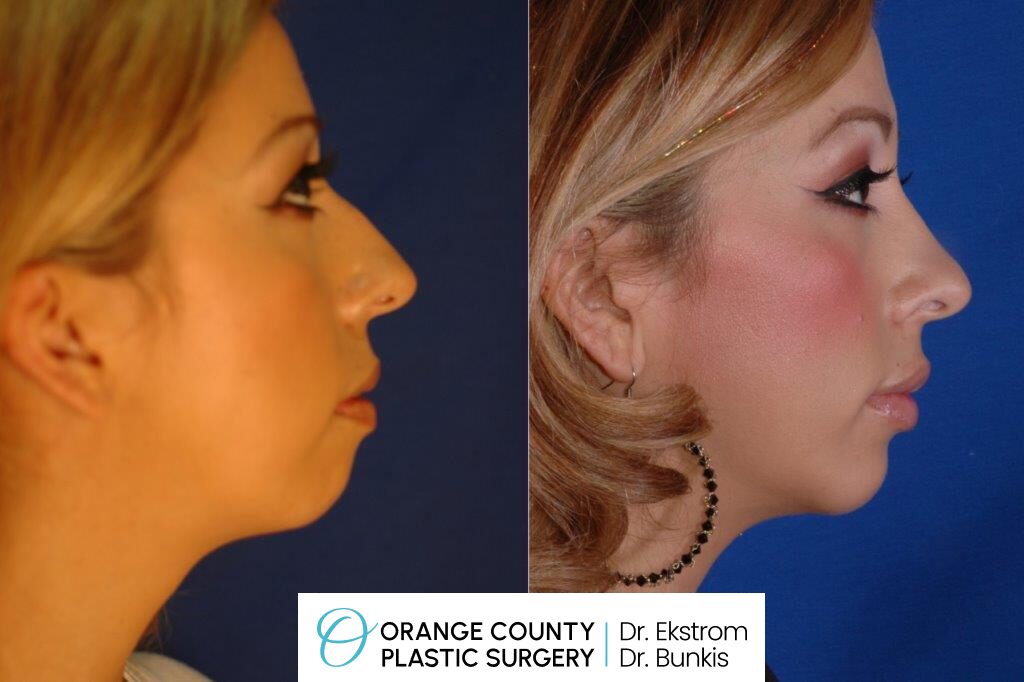
A surprisingly large number of patients who come to see me about chin augmentation also have another feature that deserves consideration: a relatively prominent nose, sometimes with a dorsal hump. Conversely, patients who are bothered by a strong or prominent nose may also have a chin that is relatively small or recessed.
In these situations, simply changing one feature may not produce the balanced result the patient is hoping to achieve.
For example, removing a dorsal hump can make the nose smaller and more refined. But if the chin is significantly recessed, the nose may still appear prominent in relation to the rest of the face. Similarly, augmenting a weak chin without addressing a disproportionately large nose may improve the chin but leave the overall profile less harmonious than it could be.
This does not mean that every patient needs both procedures. Many patients are excellent candidates for rhinoplasty alone, while others may benefit from chin augmentation alone. The decision should be individualized based on facial proportions, anatomy, goals and the patient’s preferences.
However, when both a prominent nose and a weak chin are present, it is important to discuss the relationship between them—even if the patient initially comes in concerned about only one feature.
One of the advantages of combining rhinoplasty and chin augmentation is that the two procedures can complement each other. Rhinoplasty can refine the nose, while chin augmentation can provide greater projection and definition to the lower face. Together, they may create a more harmonious relationship between the nose, lips and chin.
There are also practical advantages to combining procedures, including a single period of anesthesia and recovery rather than undergoing two separate operations. On the other hand, combining procedures means a longer operation and a more involved recovery, and it is not appropriate for every patient.
Ultimately, the goal is not to create a “perfect” nose or an exceptionally prominent chin.
The goal is balance.