Last updated: November 10, 2026
Liposuction 360, or lipo 360, means circumferential fat removal planned around selected parts of the torso, typically the abdomen, waist or flanks, and sometimes the back. It is a body-contouring approach, not whole-body liposuction or a weight-loss treatment. At Salisbury Plastic Surgery, our liposuction service addresses localized fat deposits, including those on the abdomen and flanks; the areas treated depend on the patient’s anatomy and goals.
What is liposuction 360, and which areas does it treat?
Treatment may include the upper and lower abdomen and the areas above the hips, often called love handles. Whether the back is included depends on the patient’s fat distribution, skin quality and surgical plan.
Does liposuction 360 treat the abdomen, flanks, and back?
Often, but not automatically. Cleveland Clinic’s explanation of lipo 360 describes treatment across the front, sides and back, typically involving the stomach, waist, love handles and back. A surgeon may recommend a narrower selection of areas after examining where fat is concentrated and how the skin is likely to settle.
Does “360” mean liposuction of the entire body?
No. “360” refers to working around the midsection, not removing fat from the arms, legs or every torso area. The term has no single official definition, so the areas included in a plan should not be assumed.
Are liposuction and liposuction 360 the same thing?
Liposuction is the fat-removal procedure; liposuction 360 describes a plan that treats selected areas around the torso. A single-area procedure might address one localized deposit, while a circumferential plan considers how the front, sides and back relate to one another. Neither approach is intended as a weight-loss treatment.
How does treating several torso areas differ from treating one area?
A surgeon treating one deposit can focus on that area’s outline. With a multi-area plan, the surgeon also considers transitions between the abdomen, waist and back so the torso looks balanced from different angles. The distinction is the distribution of treatment, not a guaranteed amount of fat removal.
Is liposuction 360 a separate surgical technique?
No. “360” does not specify a cannula, device or method of removing fat. It describes the treatment pattern. At Salisbury Plastic Surgery, we offer liposuction and plan the treatment areas individually rather than treating “360” as a separate surgical method. You can read more about the underlying procedure in our guide to what to know about liposuction.
How would liposuction around the torso be planned and performed?
Torso liposuction begins with a medical examination and a discussion of the areas to treat. At Salisbury Plastic Surgery, Dr. Deborah Ekstrom performs liposuction through small incisions, using a cannula to remove fat at the Orange County Surgery Center. The extent of surgery and the appropriate approach depend on the individual treatment plan.
What happens during liposuction at Salisbury Plastic Surgery?
We perform a detailed medical examination and consultation before surgery. During the procedure, the surgeon makes a small incision near a treatment area and removes excess fat through a cannula under deep sedation or light general anesthesia.
Salisbury Plastic Surgery estimates that liposuction generally takes between 1 and 2 hours, depending on how much fat is addressed and how many body parts are treated. A circumferential torso procedure may take a different amount of time, depending on the treatment plan.
Which liposuction techniques might be considered for torso contouring?
Suction-assisted liposuction removes fat through a cannula connected to suction. The American Board of Cosmetic Surgery’s patient guide also describes ultrasound-assisted liposuction, which uses ultrasound energy, and power-assisted liposuction, which uses a vibrating cannula to aid fat removal. The “360” label does not identify which method would be used.
Who might be a good candidate for liposuction 360?
A potential candidate has localized torso fat that persists despite diet and exercise, is in reasonable health and fitness, and has little skin laxity in the areas being considered. Those are the candidacy factors we use for liposuction generally. An examination determines whether a multi-area torso plan would suit the patient’s goals and anatomy.
Can liposuction address fat that persists despite diet and exercise?
Yes. Liposuction removes localized fat deposits that have not responded to diet and exercise. For someone considering waist liposuction alongside abdominal or back treatment, the question is whether removing fat in those places would improve the overall outline. Liposuction does not replace habits that support a stable weight.
What if loose skin is also a concern?
Liposuction removes fat; it does not remove substantial excess skin. The American Society of Plastic Surgeons’ liposuction guidance notes that firm, elastic skin is more likely to reshape smoothly, while less elastic skin may remain loose. At Salisbury Plastic Surgery, liposuction may be paired with a skin-tightening procedure when appropriate. The recommendation depends on whether fat, skin laxity or both are driving the concern.
What are the risks of liposuction 360, and who should avoid it?
Swelling is expected during healing; bruising and temporary soreness are also common. Uneven contours are possible. Less common but potentially serious complications include significant bleeding, infection, blood clots and anesthesia-related problems. Individual risk varies with medical history and the extent of treatment, so a multi-area plan requires assessment of medical fitness, skin quality, monitoring and fluid balance. “360” does not specify a fixed volume of fat removal or mean liposuction is suitable for everyone.
Why do fluid management and monitoring matter when several areas are treated?
A 2013 article in Plastic and Reconstructive Surgery Global Open presents five principles of advanced liposuction: preoperative evaluation and planning, intraoperative monitoring and safety measures, wetting solutions and fluid resuscitation, circumferential contouring and complication prevention, and outcomes measurement. Wetting solution is introduced into tissue as part of many liposuction approaches; the surgical team must account for fluids given and removed while monitoring the patient during surgery. Treating several areas makes a patient-specific plan especially important, but the number of areas alone does not determine how much fat will be removed.
How can a surgeon reduce the risk of uneven contours?
Planning the transitions between treated areas can help the torso look balanced rather than leaving an abrupt change in contour. Uneven fat removal can cause dimpling or waviness, and skin with poor elasticity may not settle smoothly even when fat is removed.
When should someone postpone or reconsider liposuction?
A person whose medical condition makes surgery unsafe, whose weight fluctuates substantially, who smokes and cannot stop before surgery, or whose main concern is loose skin may need to postpone liposuction or consider another approach. Discuss your health history, medications, smoking, anesthesia concerns and skin quality with your own clinician before deciding on surgery.
After liposuction, seek urgent medical care for chest pain, trouble breathing or fainting. Contact the surgical team promptly about fever, spreading redness or worsening pain. Swelling is expected during healing, but symptoms that are severe or worsening need assessment.
How long does recovery take after torso liposuction?
Recovery after torso liposuction varies with the areas treated and the individual patient. At Salisbury Plastic Surgery, patients can expect swelling and are asked to wear bandages and a compression garment during healing. Recovery generally takes a couple of weeks after our liposuction procedures, but that is not a guaranteed timetable for treatment of several torso areas.

Will I need a compression garment after liposuction?
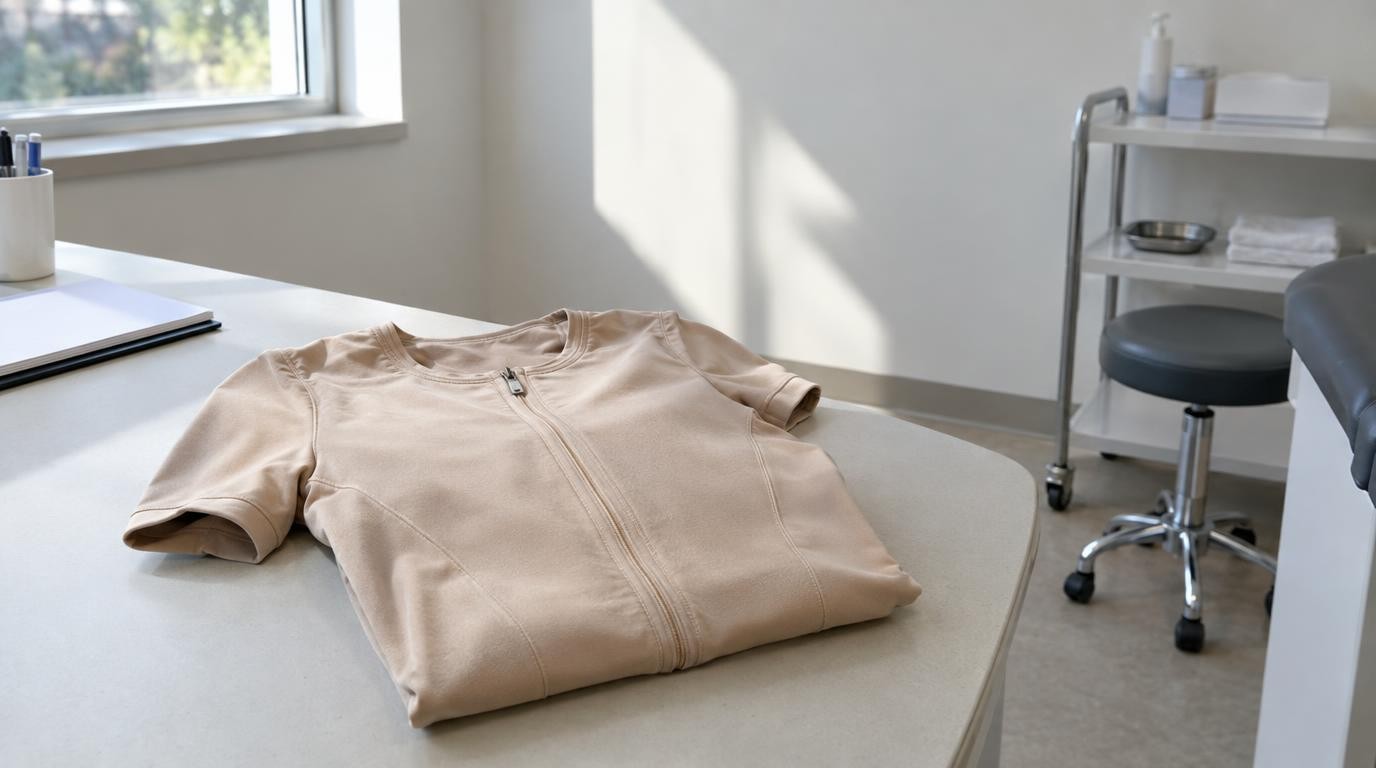
Yes, a compression garment is part of our documented aftercare, along with bandages. How long the garment is worn and how the treated areas are cared for depend on the procedure. For a broader discussion of healing, see our liposuction recovery and results timeline.
When can I expect swelling to improve?
Swelling occurs after liposuction and should gradually improve during healing, but its pace differs among patients. Treatment across several torso areas may not feel like recovery from treatment of a single deposit. Your postoperative instructions, rather than a general timeline, should guide activity and follow-up.
How much weight do you lose with 360 liposuction?
Liposuction 360 is meant to change torso contours, not produce a predictable amount of weight loss. According to Cleveland Clinic’s liposuction information, any weight lost depends on the areas treated and how much fat is removed. The American Society of Plastic Surgeons says most liposuction patients lose two to five pounds; that general figure cannot predict your individual result from a proposed Lipo 360 plan.
When will the final liposuction contours be visible?
Early swelling can obscure the new shape. We expect final liposuction results to appear 4 to 6 months after the procedure. That is a general expectation for our liposuction patients, not a guarantee that every area in a proposed circumferential plan will settle at the same pace.
How long can liposuction results last?
With a balanced diet and healthy lifestyle, liposuction results can last for years. Fat removal changes the contour of treated areas, but later weight gain can change the body’s shape. The most useful measure of a result is whether the torso contour meets realistic goals, not a number on the scale.
What should you ask at a liposuction consultation in Corona del Mar?
Key topics include the proposed treatment areas, realistic contours for your skin and fat distribution, anesthesia and fluid monitoring, recovery, and options if loose skin is the main concern. Dr. Deborah Ekstrom evaluates these factors before liposuction at Salisbury Plastic Surgery in Corona del Mar, California.

Does Salisbury Plastic Surgery offer a circumferential plan for my goals?
We offer liposuction for localized fat on the abdomen and flanks, but our published service description does not confirm a named Lipo 360 service or back treatment. Ask Dr. Ekstrom whether a multi-area torso plan is available and appropriate for you, and which areas it might include.
Who will monitor my vital signs and fluid balance during surgery?
Monitoring vital signs and accounting for fluid given and removed help guide safe care, particularly when several areas are treated. Ask Dr. Ekstrom who would monitor your vital signs and who would track fluid balance during your procedure.
How will my surgeon plan for even contours across treated areas?
Dr. Ekstrom would assess fat distribution and skin elasticity, then discuss how to plan smooth transitions between any areas selected for treatment. Substantial loose skin may change the recommendation because liposuction removes fat without removing excess skin.
Frequently Asked Questions
Can Lipo 360 get rid of cellulite?
No. Lipo 360 removes fat from selected areas around the torso, but it does not treat the connective tissue bands that contribute to cellulite dimples. The American Society of Plastic Surgeons notes that liposuction is not an effective cellulite treatment.
Will Lipo 360 remove stretch marks?
No. Liposuction removes fat beneath the skin; it does not remove stretch marks on the skin. Mayo Clinic also notes that liposuction does not remove stretch marks.
Should I get Lipo 360 or a tummy tuck?
It depends on whether your main concern is localized fat, excess skin or abdominal muscle laxity. Lipo 360 targets fat around selected torso areas. A tummy tuck removes excess abdominal skin and tightens abdominal muscles, according to Cleveland Clinic. Localized fat with elastic skin may favor liposuction, while excess abdominal skin or muscle laxity may favor a tummy tuck.
Is there a nonsurgical alternative to Lipo 360?
Nonsurgical fat-freezing treatments, such as CoolSculpting, may be an option for some localized fat deposits, but they are not the same as surgical contouring around the torso. An article on the American Society of Plastic Surgeons’ site notes that liposuction may be more suitable when someone wants to treat a larger area or make a more substantial contour change.
Does Lipo 360 leave scars?
Yes. Torso liposuction requires small incisions that leave scars, although scarring after our liposuction procedures is generally minimal. The number and placement of incisions depend on the areas treated.
Is there a limit to how much fat can be removed during Lipo 360?
Yes. Treatment around the torso does not mean unlimited fat removal. An article on the American Society of Plastic Surgeons’ site describes a recommendation of five liters of total lipoaspirate in a single procedure. Lipoaspirate includes fat and fluid, not fat alone. The amount appropriate for an individual procedure may be lower.
Can fat come back after Lipo 360?
Removed fat cells do not return to the treated areas, but you can still gain weight after liposuction. Mayo Clinic explains that remaining fat cells can grow larger with weight gain and that contour changes usually last when weight stays stable. Lipo 360 changes shape; it does not prevent future weight gain.
Is liposuction 360 the right approach for your torso goals?
If you are interested in torso liposuction, contact Salisbury Plastic Surgery to arrange a consultation with Dr. Deborah Ekstrom in Corona del Mar, California. We can discuss the areas that concern you, whether a multi-area plan is appropriate, and what to expect from treatment and recovery.
This information is general and is not medical advice. Talk to a licensed clinician about your own situation before making a treatment decision.