
Last updated: July 12, 2026
For patients across Worcester, Massachusetts and surrounding Central Massachusetts communities, the search for non-surgical skin tightening options now has a new benchmark of clinical evidence. A multicenter randomized controlled trial published in February 2026 in the peer-reviewed journal Lasers in Surgery and Medicine evaluated a novel monopolar radiofrequency device for skin tightening over six months, providing rigorous validation for a treatment approach that has been refined for nearly 25 years. This fresh clinical data gives local providers a high-credibility foundation to discuss radiofrequency skin tightening with prospective patients seeking measurable, non-invasive results.
What Is RF Skin Tightening and Why Are Worcester Patients Choosing It?
Radiofrequency skin tightening is a non-surgical cosmetic treatment that uses controlled radiofrequency energy to gently heat the deeper layers of the skin, stimulating the body’s natural collagen production process. Unlike procedures that remove tissue or require incisions, radiofrequency technology delivers energy beneath the surface while keeping the outer skin intact, allowing the dermis to gradually firm and remodel over time. For patients in the Worcester area seeking meaningful improvements without surgery, this approach has become a practical option that fits into active lifestyles without requiring extended recovery.
How Does Radiofrequency Energy Differ From Other Skin Treatments?
Radiofrequency energy distinguishes itself from laser and ultrasound technologies by the way it delivers heat into the skin. Lasers target specific color molecules called chromophores, while ultrasound focuses energy at precise depths beneath the skin. Radiofrequency, by contrast, generates heat by resisting the flow of energy between electrodes, creating a uniform warming effect throughout the tissue. This mechanism allows radiofrequency to treat a broad range of skin types and tones more consistently, since the process is not dependent on melanin absorption the way laser treatments can be. The thermal effect reaches both superficial and deeper skin layers simultaneously, encouraging collagen contraction and new collagen formation across the treatment area.
What Skin Concerns Can Radiofrequency Technology Address?
Patients who notice early to moderate skin laxity – the kind that creates a slightly loose jawline, softening along the neck, or crepey texture on the upper arms – often find radiofrequency treatment addresses these concerns effectively. Beyond tightening, RF technology can improve skin texture, smooth fine lines, minimize enlarged pores, and enhance overall skin quality on the face, neck, and body. The versatility of radiofrequency makes it suitable for treating multiple areas including the cheeks, jawline, neck, periorbital region, arms, abdomen, and thighs, providing a comprehensive approach to non-surgical skin rejuvenation.
What Did the 2026 Multicenter Clinical Trial Reveal About RF Skin Tightening?
The February 2026 study published in Lasers in Surgery and Medicine was a randomized, assessor-blind, positive parallel-controlled, non-inferiority trial evaluating a novel monopolar radiofrequency device for skin tightening over six months across multiple clinical centers. This rigorous design provides high-quality evidence supporting the efficacy and safety of the treatment, offering prospective patients and providers confidence in treatment outcomes based on the most methodologically robust evaluation of monopolar RF technology available.

How Was the 2026 Study Designed and Conducted?
The trial enrolled participants across multiple clinical sites and assigned them to receive treatment with the investigational monopolar RF device under standardized protocols. Assessor blinding meant that the clinicians evaluating treatment outcomes were unaware of which participants received the active treatment, reducing the potential for bias in measuring results. The positive parallel-controlled design meant that the new device was compared directly against an established RF treatment approach, allowing researchers to determine whether the investigational device performed comparably or better than existing options. The six-month observation period captured not only immediate post-treatment effects but also the progressive improvements that result from ongoing collagen remodeling, which is central to how radiofrequency skin tightening works.
What Were the Key Findings After Six Months?
Participants treated with the monopolar RF device demonstrated measurable improvements in skin laxity and overall skin quality across multiple assessment points throughout the study period. The positive parallel-controlled design confirmed that the device performed non-inferior to – and in some measures exceeded – the established comparison treatment, supporting its clinical adoption for non-surgical skin tightening. Notably, the study documented a favorable safety profile, with treatment-related effects that were mild and transient. The findings align with the broader body of evidence showing that when delivered with appropriate energy levels and proper technique, radiofrequency skin tightening produces consistent, noticeable improvements in skin firmness without the risks associated with surgical procedures.
How Has Radiofrequency Skin Tightening Evolved Over Nearly 25 Years?
Radiofrequency skin tightening technology has been in clinical use since 2001, accumulating over 1 million documented treatments and generating a substantial evidence base spanning nearly 25 years of continuous refinement. Early monopolar RF devices established the foundational principles of delivering controlled thermal energy to the dermis to stimulate collagen production, while successive generations of devices introduced improvements in energy delivery, treatment comfort, and patient outcomes. This extended history means that the technology is well understood, extensively studied, and supported by a deep repository of clinical data that newer treatments like the 2026 trial build upon. For patients considering radiofrequency skin tightening, this mature track record offers reassurance that the approach is not experimental but rather a well-established, continuously improving treatment modality.
What Is the History of RF Technology in Aesthetic Medicine?
The first-generation Thermage system, receiving clearance in 2001, introduced the concept of monopolar radiofrequency energy for skin tightening and established the core mechanism that many subsequent devices have adapted or refined. Over the following two decades, multiple manufacturers developed their own RF platforms – some using monopolar configurations, others employing bipolar or multipolar designs – each with specific advantages for different treatment areas and skin conditions. Clinical experience expanded from early adopters in academic and specialized aesthetic practices to widespread use across dermatology and plastic surgery settings. RF skin tightening and other advanced technologies continue to evolve under the guidance of board-certified specialists like Dr. Deborah Ekstrom at Salisbury Plastic Surgery, who has observed how the technology has matured from early bulky handpieces to more refined delivery systems that offer greater consistency and patient comfort.
What Makes the 2026 Trial Different From Earlier Research?
While the foundational Thermage technology and early studies from the 2000s established proof of concept for radiofrequency skin tightening, many of those initial trials lacked the methodological rigor now considered standard for aesthetic device research. The 2026 multicenter trial distinguishes itself through its randomized, assessor-blind, positive parallel-controlled, non-inferiority design – a level of rigor that exceeds typical aesthetic device studies and provides clinicians with the kind of high-quality evidence needed for confident patient counseling. The publication in Lasers in Surgery and Medicine, a well-regarded peer-reviewed journal, further signals that the findings have been evaluated by independent experts in the field. This combination of rigorous methodology and independent validation makes the 2026 trial particularly valuable for patients and providers seeking the most current, credible data on RF skin tightening efficacy.
What Are the Benefits of Non-Surgical Skin Tightening for Patients in Central Massachusetts?
Radiofrequency skin tightening appeals to patients throughout the Worcester area and nearby towns like West Boylston, Shrewsbury, Auburn, and Holden because it delivers meaningful improvements without the commitment, cost, or recovery time associated with surgical procedures. The treatment fits easily into busy schedules, requiring no general anesthesia, no incisions, and no meaningful downtime. Patients return to normal activities immediately, which is particularly valuable for working adults in Central Massachusetts who cannot afford extended recovery periods. The gradual, natural-looking results also appeal to those who prefer improvements that do not appear sudden or obviously procedural. Laser skin resurfacing and other complementary treatments can further enhance outcomes when combined with radiofrequency therapy.
How Does RF Skin Tightening Compare to Surgical Options?
Surgical procedures like facelifts and body lifts remain the gold standard for patients with advanced skin laxity and significant tissue excess. However, many patients presenting for consultation at practices like Salisbury Plastic Surgery have concerns that fall short of requiring surgery. For these individuals, RF skin tightening offers a compelling middle ground – meaningful improvements in skin firmness without the invasiveness, scarring, or downtime of the operating room. The two approaches are not mutually exclusive; some patients choose radiofrequency skin tightening to address early changes and extend the interval before they may consider surgical intervention, while others use it to maintain results following a surgical procedure.
What Is the Treatment Experience Like?
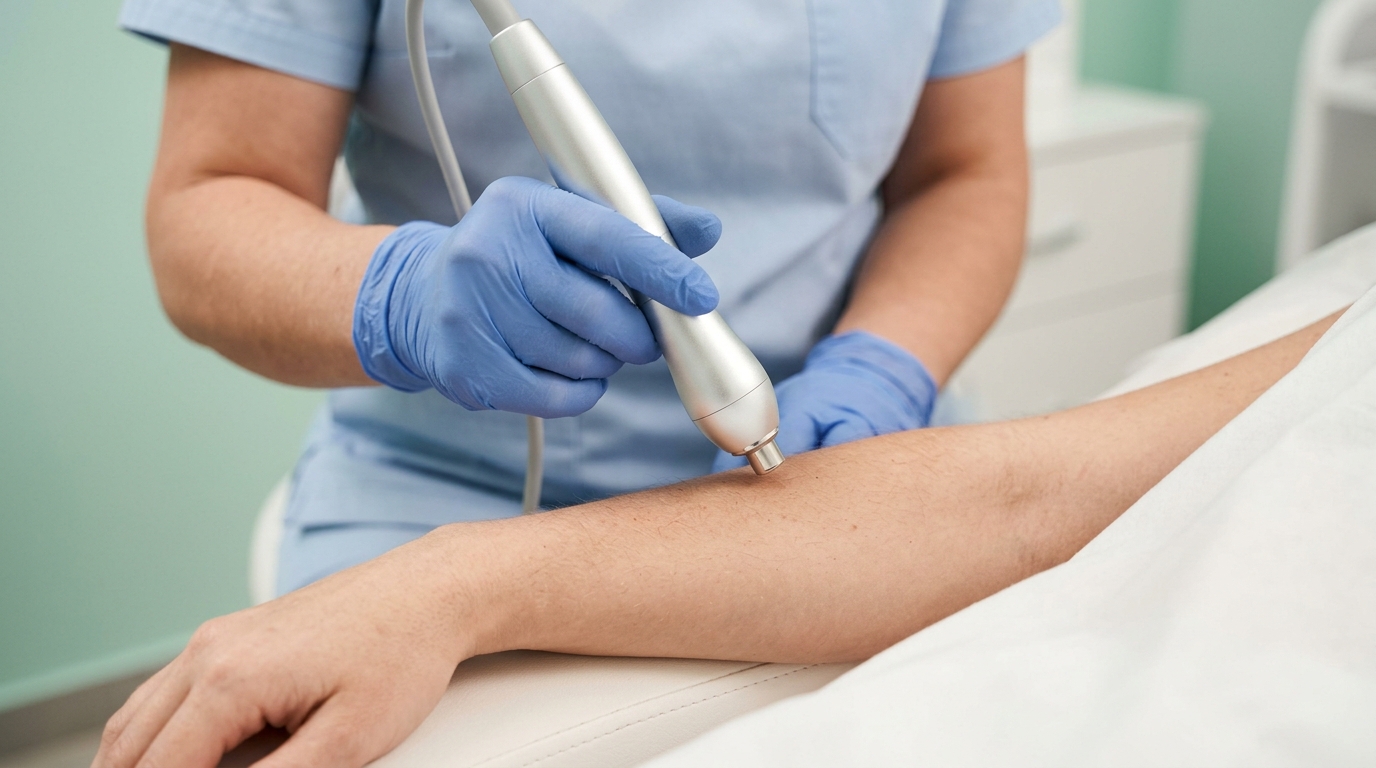
During an RF skin tightening session, the practitioner applies a handpiece to the skin that delivers controlled radiofrequency energy in a pattern designed for even heating across the treatment area. Most patients describe the sensation as a deep warmth with occasional tingling or heat spikes, but treatments are generally well-tolerated without the need for numbing injections. Some practices use topical anesthetic creams or cooling devices to enhance comfort. The duration of a treatment session varies depending on the areas treated, ranging from approximately 30 minutes for a small zone like the periorbital area to 60 to 90 minutes for larger regions such as the abdomen or full face and neck.
How Many Treatments Are Typically Needed?
One of the notable advantages of monopolar RF skin tightening is that many patients achieve their desired results with a single treatment session. The collagen stimulation process continues for several months following a single procedure, so improvements progressively unfold over time rather than peaking immediately. Some patients, depending on their skin quality, age, and treatment goals, may benefit from an additional session spaced several months to a year apart. Your provider at Salisbury Plastic Surgery can help determine whether one treatment or a series is most appropriate based on your individual assessment during consultation.
Am I a Good Candidate for RF Skin Tightening Treatments?
Radiofrequency skin tightening is broadly suitable for adults across a range of skin types and tones, making it one of the more inclusive non-surgical skin rejuvenation options available. Because radiofrequency energy works by heating water molecules in the skin rather than targeting pigment, it does not carry the same restrictions as laser treatments that may be less effective or carry higher risks on darker skin tones. Candidates who see the most satisfying results are typically those with mild to moderate skin laxity – loose skin that has not yet progressed to the point of requiring surgical removal. Patients with severe laxity or significant skin excess are generally better served by surgical options, which can be discussed during a personalized consultation.
What Skin Types and Ages Respond Best to Radiofrequency?
Radiofrequency technology is effective across Fitzpatrick skin types I through VI, meaning it accommodates the full range of skin tones from the fairest to the deepest. Age-wise, the treatment tends to be most popular among patients in their 30s through 60s who are beginning to notice the early signs of collagen loss but have not yet developed the advanced tissue laxity that characterizes more advanced aging. That said, chronological age is less important than biological skin condition; a motivated patient in their 40s with excellent skin quality may be less of an ideal candidate than a patient in their 60s with minimal laxity and realistic expectations. During your consultation, Dr. Ekstrom and the team will assess your specific concerns to determine whether RF skin tightening aligns with your goals.
What Areas of the Body Can Be Treated?
RF skin tightening is versatile enough to address skin laxity on nearly any area of the face and body where mild to moderate looseness is a concern. Common treatment zones include the face and jawline, the neck and submental area, the periorbital region around the eyes, the upper arms, the abdomen, the thighs, and the knees. Patients from communities throughout Central Massachusetts including Grafton, Millbury, Leicester, and Boylston have sought treatment for these areas, finding that radiofrequency offers a consistent approach that does not require different devices or protocols for different body regions.
What Should Worcester Patients Know Before Scheduling RF Skin Tightening?
Before scheduling any radiofrequency skin tightening treatment, patients should have a thorough consultation with a qualified provider to discuss their medical history, skin condition, and realistic expectations for outcomes. While RF skin tightening is non-surgical, it is still a medical procedure that requires appropriate patient selection and informed consent. Understanding the treatment process, the expected timeline for results, and the maintenance considerations will help ensure a satisfying experience. Practices serving the Worcester and West Boylston areas that offer radiofrequency skin tightening should provide this education as part of the consultation process.
How Should I Prepare for a Radiofrequency Treatment?
Preparation for RF skin tightening is straightforward compared to surgical procedures. Patients are generally advised to arrive with clean skin, free of makeup, lotions, or other topical products in the treatment area. Discontinuing retinoids, alpha-hydroxy acids, and other potentially irritating skincare products for several days before treatment can reduce the risk of skin sensitivity. Sun exposure should be minimized in the weeks leading up to treatment, as freshly tanned or sunburned skin is not appropriate for radiofrequency energy delivery. Your provider will give you specific pre-treatment instructions tailored to your skin and medical history.
What Does Recovery Look Like After RF Skin Tightening?
One of the defining advantages of RF skin tightening is the minimal recovery requirement. Most patients leave the treatment appointment able to resume normal activities immediately, including work and light exercise. Temporary effects may include mild redness, warmth, or slight swelling in the treated area, typically resolving within a few hours to a day. There is no wound care, no bandaging, and no restrictions on bathing. The collagen remodeling process that drives the long-term results begins immediately, but visible improvements develop gradually over three to six months as new collagen is laid down and existing fibers contract and reorganize.
Is RF Skin Tightening Right for You?
Radiofrequency skin tightening represents a scientifically validated, non-surgical approach to skin laxity that has earned its place in modern aesthetic medicine through nearly 25 years of clinical use and ongoing research refinement. The 2026 multicenter trial adds a new layer of high-quality evidence supporting the efficacy and safety of monopolar radiofrequency technology for patients seeking meaningful improvements without surgery. For adults across Worcester, West Boylston, Auburn, Grafton, Holden, Leicester, Millbury, Shrewsbury, Boylston, and Paxton who are considering non-invasive skin rejuvenation, this treatment offers a well-supported option worth exploring with a qualified provider.
Salisbury Plastic Surgery, led by Dr. Deborah Ekstrom, provides RF skin tightening and related non-surgical treatments for patients throughout Central Massachusetts. If you are interested in learning whether radiofrequency skin tightening is appropriate for your skin concerns, the team welcomes the opportunity to meet with you for a consultation. You can reach Salisbury Plastic Surgery to schedule your visit and take the next step toward tighter, more refreshed-looking skin.
Frequently Asked Questions
What is RF skin tightening and how does it work?
Radiofrequency skin tightening is a non-surgical cosmetic treatment that uses controlled radiofrequency energy to gently heat the deeper layers of skin, stimulating the body’s natural collagen production. Unlike surgical procedures, radiofrequency technology delivers energy beneath the surface while keeping the outer skin intact, allowing the dermis to gradually firm and remodel over time.
How long does it take to see results from RF skin tightening?
Results develop gradually over three to six months as new collagen forms and existing fibers contract. The 2026 clinical trial tracked participants for six months, documenting progressive improvements from the collagen remodeling process that drives long-term outcomes. Improvements continue to unfold over this period rather than appearing all at once.
What are the benefits of RF skin tightening compared to surgery?
RF skin tightening offers meaningful improvements in skin firmness without the invasiveness, scarring, or downtime of surgical procedures. It fits easily into active lifestyles without requiring general anesthesia, incisions, or extended recovery. The gradual, natural-looking results appeal to patients who prefer improvements that do not appear sudden or obviously procedural.
How many RF skin tightening treatments do I need?
Many patients achieve their desired results with a single treatment session. The collagen stimulation process continues for several months following treatment, so improvements progressively unfold over time. Some patients may benefit from an additional session spaced several months to a year apart, depending on their skin quality, age, and treatment goals.
What is the recovery time after RF skin tightening?
One of the defining advantages of RF skin tightening is the minimal recovery requirement. Most patients resume normal activities immediately, including work and light exercise. Temporary effects may include mild redness, warmth, or slight swelling, typically resolving within a few hours to a day. There is no wound care, bandaging, or restrictions on bathing.
Am I a good candidate for RF skin tightening?
Radiofrequency skin tightening is broadly suitable for adults with mild to moderate skin laxity across a range of skin types and tones I through VI. The treatment is most popular among patients in their 30s through 60s who are beginning to notice early signs of collagen loss. Patients with severe laxity or significant skin excess are generally better served by surgical options.