
Last updated: November 26, 2026
Scars from breast lift surgery are permanent incision lines, but they usually fade as healing progresses. A breast lift removes excess skin and reshapes the breast, usually moving the nipple and areola higher. It may suit patients with sagging or stretched breasts, downward-pointing nipples, or reduced skin elasticity who have realistic expectations; a lift alone improves position and shape rather than increasing breast volume. The incision pattern depends on how much skin needs to be removed and how much lifting is needed: a shorter incision can mean less visible scarring, but it may not provide enough lift.
What do breast lift scars look like?
Breast lift scars may look raised or discolored while healing before they flatten and fade. Their visibility varies with incision placement and individual healing, and no pattern guarantees an invisible scar.
Where are periareolar, lollipop, and anchor scars located?
At Salisbury Plastic Surgery, we perform breast lifts under general anesthesia as outpatient surgery. We may use an incision around the areola, an incision around the areola plus a vertical line to the fold, or those lines plus a horizontal incision along the fold. The horizontal line completes the anchor shape. Some lines sit within natural breast contours, while others remain visible on the breast surface.
Are breast lift scars permanent?
Yes. The American Society of Plastic Surgeons’ breast lift procedure guidance says incision lines are permanent, although they generally fade and improve over time. Their eventual appearance depends in part on how a person’s skin heals.
Which breast lift incision suits my degree of sagging?
Incision choice depends on breast anatomy and the amount of lifting and skin removal required. An areola-only pattern can suit limited sagging, a lollipop pattern allows more reshaping, and an anchor pattern allows more extensive skin removal. Dr. Deborah Ekstrom chooses an approach after examining the breasts rather than assuming every patient needs an anchor incision.
The American Society of Plastic Surgeons’ procedure guidance identifies breast size and shape, areola size and position, degree of sagging, skin quality and elasticity, and excess skin as factors in technique selection. Our guide to why mastopexy is not one-size-fits-all explores that individualized planning.
When might an anchor incision be needed?
Anchor breast lift scars may be part of a plan when substantial sagging or excess skin calls for reshaping that a shorter incision cannot provide. The added line along the breast fold gives the surgeon access to remove and tighten more skin. The trade-off is a longer total incision, not a promise of a particular scar appearance.
Can a periareolar incision provide enough lift?
A periareolar breast lift incision may provide enough correction when sagging is limited. Because the incision circles only the areola, it offers less scope for removing loose skin than a vertical or anchor pattern.
Are less invasive approaches a proven way to avoid an anchor scar?
In a 20-patient study of internal mastopexy with implants, surgeons used an incision at the breast fold or around the areola in selected patients with mild sagging, pseudoptosis, or asymmetry, avoiding an inverted-T scar. The approach was not incision-free, and this small study does not establish it as an option for more extensive sagging.
A separate single-center prospective study of helium-plasma radiofrequency treated 15 patients with mild-to-moderate sagging and assessed results at 180 days. These preliminary studies do not establish a scar-free, equally effective replacement for a conventional lift. We do not present either technique as a breast lift offering at Salisbury Plastic Surgery.
How do breast lift scars change during recovery?
You can see a change in breast position immediately after a lift, although swelling can obscure the final shape until it subsides. Scar fading continues after the incision has healed. Aging, pregnancy, and weight changes can cause breasts to sag again; a lift does not stop those changes. Follow your activity restrictions even when movement feels comfortable so the incisions have time to heal.
How long does it take for breast lift scars to fade?
There is no single fading date. MedlinePlus guidance on breast lifts says scars can remain quite visible for up to a year, then may fade without becoming invisible. Changes in color and texture can therefore continue well after the initial wound has closed.
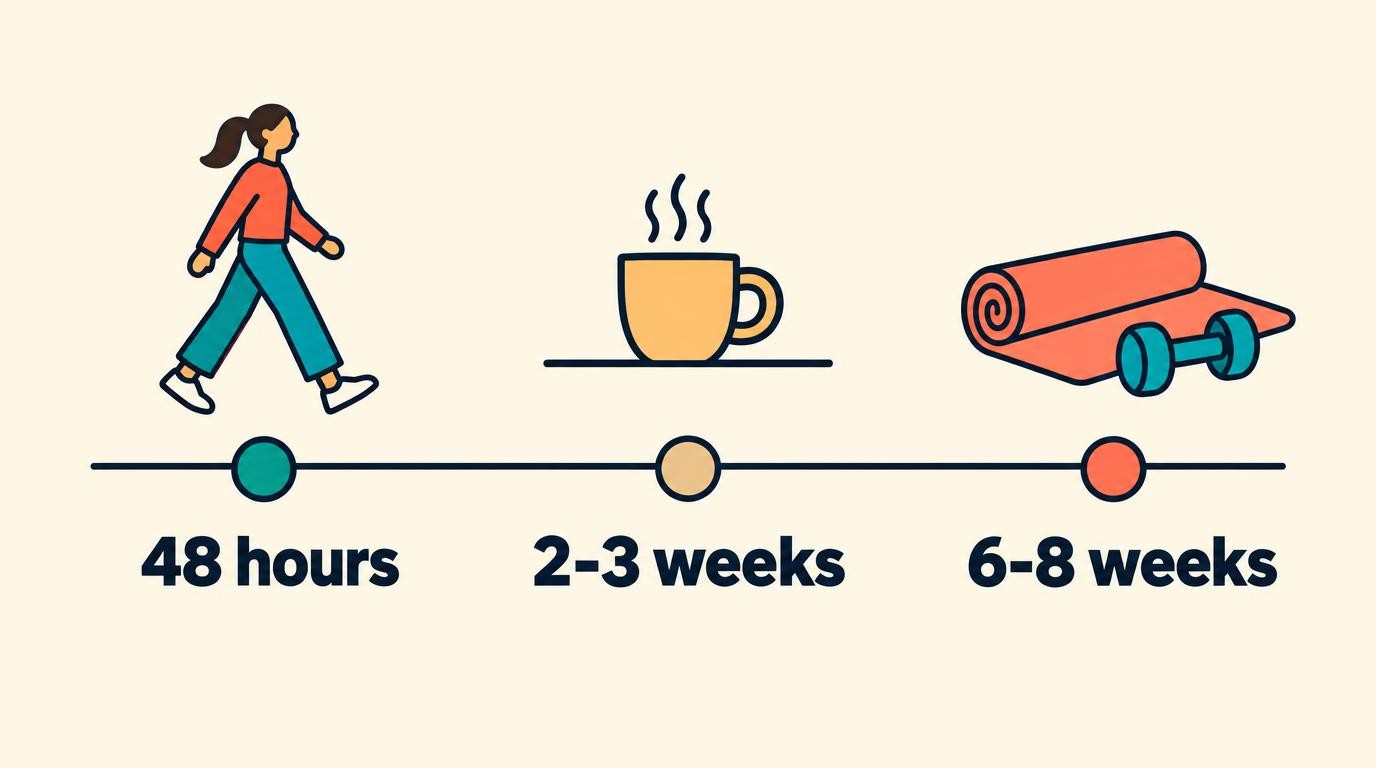
At Salisbury Plastic Surgery, we encourage gentle movement within the first 48 hours. We generally advise resuming usual activities within 2-3 weeks and waiting 6-8 weeks before exercising; heavy lifting and strenuous chest activity remain off-limits during recovery. These limits protect healing incisions, but they do not predict when scars will fade. Follow your individual instructions on wearing a surgical or supportive bra during healing. A lift does not make bras unnecessary; continuing to wear one afterward can help support your breasts.
Can I sleep on my side 4 weeks after a breast lift?
Not automatically. The American Board of Cosmetic Surgery’s breast lift guide advises back sleeping for the first several weeks or longer. Four weeks alone is not a clearance date: incision healing, tenderness, and any combined procedure may mean back sleeping is needed longer.
How can I care for breast lift scars as they heal?
Breast lift scar care follows the stages of wound healing:
- While incisions are healing, follow your wound-care and activity instructions, keep the area covered from the sun, and do not put scar products on an open wound.
- Once incisions are fully closed and cleared for topical care, silicone gel or sheets may be an option.
Scar care cannot erase an incision line. An article on the American Society of Plastic Surgeons’ site discusses silicone products and massage as options for improving scar appearance. One surgeon quoted in the article suggests using silicone gel and gentle massage twice daily for about 12 months, although the postoperative plan and time needed can vary.
When can I use silicone gel or sheets on a breast lift scar?
Wait until the incision is fully closed and the surgeon approves applying a product. Silicone gel and sheets are used on healed skin, not on a draining or opening wound. Silicone gel and sheets are alternative ways to cover a healed scar; neither guarantees a scar-free result.
Does massaging break up scar tissue?
Gentle massage may soften thickened scar tissue and improve flexibility, but it does not physically remove a scar. The American Board of Cosmetic Surgery’s scar-care guidance says to begin only after your surgeon confirms the incision has healed enough, typically around 2–3 weeks after surgery; your clearance may come later. Do not massage skin that is open, irritated, or becoming more painful.
What are the potential downsides of breast lift surgery?
Breast lift surgery leaves permanent scars and involves swelling and surgical risk. Possible complications include infection, poor incision healing, changes in nipple or breast sensation that may be temporary or permanent, persistent asymmetry, and anesthesia-related problems. Partial or total loss of the nipple and areola is another serious potential complication. Dr. Ekstrom reviews personal health and healing risks before surgery so patients can weigh a desired lift against its potential downsides.
The American Society of Plastic Surgeons’ breast lift safety guidance also lists bleeding, fluid accumulation, contour irregularities, fat necrosis (death of fatty tissue deep in the skin), deep vein thrombosis (a blood clot in a deep vein), heart or lung complications, and the possibility of further surgery. Natural differences between breasts can remain even after a successful lift. Discuss your own risk factors and expectations with your clinician before deciding on surgery.
Who might need to postpone a breast lift?
Pregnancy, current nursing, plans for more children, or substantial planned weight loss may warrant postponing a breast lift because later changes can affect the result. Nicotine use or a health condition that interferes with healing may also warrant delaying elective surgery until the concern is addressed.
When should I contact my surgeon about an incision?
Contact our team promptly if an incision begins to open or develops worsening redness, unexpected drainage, or increasing pain, or if you develop a fever. Do not cover a suspected wound problem with silicone or another scar product instead of seeking advice. Seek urgent medical care for severe bleeding, chest pain, or trouble breathing.
How do scars compare after a lift alone, a lift with implants, or a reduction?
These procedures address different goals, and the incision plan depends on the correction needed:
| Procedure | Effect on breast volume | How scars are planned |
|---|---|---|
| Lift alone | Generally stays the same while the breast is raised and reshaped | Periareolar, vertical, or anchor incisions may be used, depending on the lift needed |
| Lift with implants | Increases with the added implant | Lift incisions may still be needed to address loose skin or a low nipple |
| Reduction | Decreases as breast tissue is removed | The pattern depends on tissue and skin removal; an anchor incision is not always required |
Combining procedures can change postoperative instructions, so scar care and activity guidance must match the operation performed. Our breast augmentation with lift recovery guide discusses that combined approach.
Will adding implants eliminate the need for a lift incision?
No. An implant can increase fullness, but it does not reliably remove loose skin or reposition a low nipple on its own. If those changes are central to the patient’s goal, a lift incision may still be needed. The incision pattern depends on anatomy and the amount of correction planned, not simply on whether implants are included.
Does a breast reduction require an anchor scar?
Not always. A reduction removes breast tissue as well as reshaping the breast, and the amount of skin removal can make a longer incision appropriate. An anchor pattern is one option, not a universal requirement. The proposed reduction, nipple position, skin quality, and desired shape all inform the incision plan.
Frequently Asked Questions
What is the 45-55 breast rule?
The 45:55 breast rule refers to a proposed ratio of upper to lower breast fullness described in a preference study reported by an article on the American Society of Plastic Surgeons’ site. It is not a medical rule or a method for choosing lift incisions. Scar placement depends on anatomy, skin quality, and the lift needed.
Will breast lift scars show in a bikini or low-cut top?
Breast lift scars can often be covered by a bikini top or low-cut clothing, but coverage depends on the incision pattern and the garment. Surgeons try to place some lines along natural breast contours; vertical lines remain on the breast surface. No incision placement guarantees that a scar will be invisible.
Can sun exposure make breast lift scars darker?
Yes. Sun exposure can darken a healing scar and make it more noticeable. Keep healing incisions covered, and wait until your surgeon approves topical products before applying sunscreen. Once approved, use broad-spectrum SPF 30 or higher.
Can housework or lifting affect how my breast lift scars heal?
Yes. Lifting, laundry, cleaning, and similar tasks can place tension on healing incisions and may contribute to wound separation. Follow your activity restrictions even if you feel well enough to do chores.
Can I breastfeed after a breast lift?
Breastfeeding may still be possible after a breast lift, but it cannot be guaranteed. An article on the American Society of Plastic Surgeons’ site explains that repositioning the nipple and areola can affect milk ducts, although many patients have breastfed successfully after surgery.
Can a breast lift make my areolas smaller without another scar?
Yes. Some breast lifts can reduce areola size while repositioning the nipple, without requiring a separate incision solely for that reduction. A periareolar lift places its incision around the areola’s edge, although that pattern cannot provide enough correction for everyone. If more lifting is needed, a vertical or anchor incision may be required in addition to the incision around the areola.
What if my breast lift scars are still raised after a year?
A scar that remains raised at one year may still flatten or fade. The American Board of Cosmetic Surgery’s scar-care guidance says scars can improve for up to 18 months. If the scar persists or concerns you, arrange an assessment with your surgeon; after examining it, your surgeon can discuss whether treatment, such as laser or another energy-based therapy, is appropriate.
What should I ask at a breast lift consultation about scars?
A breast lift consultation should establish which incision can achieve the lift you want, where each line would sit, and how visible the scars may remain. Your surgical plan should also cover wound care, activity restrictions, and when scar products could begin. Together, these details clarify the trade-off between scar length and lifting ability.
Can you draw where my proposed scars would be?
Ask Dr. Ekstrom to draw the proposed incision lines on a breast diagram, including any line around the areola, down the breast, or along the fold. A drawing can help you understand which lines may be covered by a bra or swimsuit and which may remain visible.
Patients traveling from Fountain Valley can discuss these choices with Dr. Deborah Ekstrom at Salisbury Plastic Surgery in Corona del Mar, California. To arrange a breast lift consultation and talk through incision placement and recovery, contact Salisbury Plastic Surgery at 508.755.4825.
This information is general and is not medical advice. Talk to a licensed clinician about your own situation before making a treatment decision.
About the doctors at Salisbury Plastic Surgery
Dr. Deborah K. Ekstrom, MD – Board-certified plastic surgeon, Medical Director and owner of Salisbury Plastic Surgery.
Dr. Juris Bunkis, MD, FACS – Plastic surgeon, diplomate of the American Board of Plastic Surgery and fellow of the American College of Surgeons.