
Last updated: November 14, 2026
An endoscopic brow lift uses small incisions behind the hairline and a camera-equipped endoscope to guide the surgeon in repositioning brow and forehead tissue. It may help if low brows make your upper eyelids look heavy or give you a tired expression, but choosing an approach starts with identifying the cause.
What Is an Endoscopic Brow Lift, and What Does It Treat?
Repositioning a low brow can reduce upper-eyelid hooding caused by brow descent and may soften forehead and frown lines. An endoscopic brow lift does not remove excess eyelid skin, which may need a different treatment.
At Salisbury Plastic Surgery, a brow lift is intended to improve the position of sagging eyebrows and soften lines across the forehead and between the eyes. The amount of improvement depends in part on the starting brow position and skin elasticity.
How Is an Endoscopic Brow Lift Different From Eyelid Surgery?
A brow lift changes the position of the brow and forehead tissue. Upper eyelid surgery addresses tissue at the eyelid itself. Hooding can involve a low brow, excess eyelid skin, or both, so identifying the cause matters before choosing surgery. The Endoscopic Brow Lift article on the American Academy of Ophthalmology’s EyeWiki notes that eyelid surgery alone may disappoint someone whose brow descent contributes to the appearance of a drooping lid. For more on planning treatment around the eyes, see our guide to when to add a brow lift to periorbital rejuvenation.
Who Is a Good Candidate for an Endoscopic Brow Lift?
A good brow lift candidate is generally in good overall health and wants to address brow drooping, skin folds or creases, or forehead wrinkles. An endoscopic approach may suit someone seeking correction across the brow and forehead, but candidacy depends on skin elasticity, the degree of sagging, hairline and facial anatomy, and the desired change.
When Might Another Brow Lift Technique Be a Better Fit?
Significant skin laxity or particularly heavy brows can make an endoscopic lift less suitable. An article on the American Academy of Ophthalmology website about endoscopic brow lifting identifies these as limitations and describes more direct approaches as potential alternatives. A receding hairline or thinning hair may also make incisions behind the hairline harder to conceal. An open or limited-incision technique may better match some patients’ anatomy and goals.
What Happens During Endoscopic Brow Lift Surgery?
During an endoscopic brow lift, the surgeon uses short scalp incisions and an endoscope to see beneath the forehead while lifting and repositioning brow and forehead tissue. Surgery is generally outpatient, but incision placement and anesthesia depend on your plan. The steps are:
- The surgeon marks the planned incisions behind the hairline.
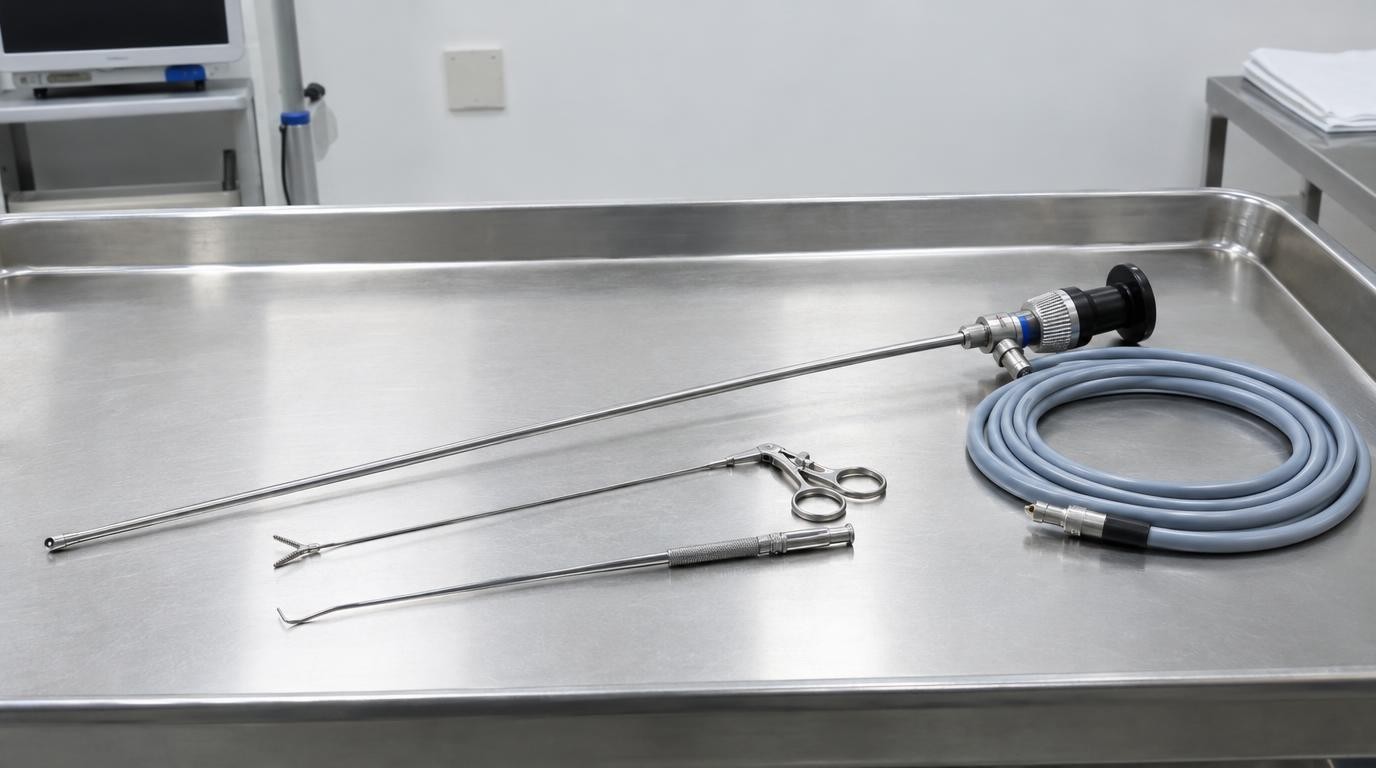
- The surgeon makes short scalp incisions and inserts an endoscope to see beneath the forehead.
- Using surgical instruments, the surgeon lifts and repositions the brow and underlying forehead tissue.
- The surgeon closes the incisions with sutures.
Where Are the Incisions, and How Does the Endoscope Help?
An article on the American Society of Plastic Surgeons website about brow lift recovery describes an endoscopic approach using three to five separate one-inch scalp incisions behind the hairline. The number and placement can vary by patient. The endoscope provides a view beneath the forehead while the surgeon works through the small incisions. Unlike some other brow lift approaches, this endoscopic method does not remove forehead skin.
What Type of Anesthesia Might Be Used?
Most brow lifts at Salisbury Plastic Surgery are performed under local anesthesia on an outpatient basis, although general anesthesia may be used for comfort. The anesthesia plan depends on the procedure and the patient.
What Are the Downsides of an Endoscopic Brow Lift?
Although its incisions are smaller than those used for an open lift, an endoscopic brow lift still involves anesthesia, recovery time, and the possibility of a result that differs from expectations. It may provide less correction when substantial loose forehead skin is the main concern.
What Risks and Side Effects Should You Discuss With Your Surgeon?
Bruising, swelling, soreness, numbness, and tingling can occur during early healing. Potential complications include bleeding, infection, anesthesia problems, persistent changes in sensation, uneven brow position, and scarring or hair changes around an incision.
Discuss your health conditions, healing risks, medications, and treatment goals with your own clinician before deciding on surgery. After an operation, seek urgent medical care for sudden vision changes, severe or rapidly worsening swelling, or bleeding that does not stop; promptly contact your surgical team about fever or increasing redness and pain.
Who Should Delay or Avoid Brow Lift Surgery?
If a health condition increases your surgical or healing risk, you may need to postpone brow lift surgery or consider another approach. If upper-eyelid heaviness comes chiefly from eyelid skin rather than brow descent, an eyelid-focused evaluation may be more useful than a brow lift alone. Your clinician can assess which option fits your circumstances. Our information on upper eyelid ptosis repair explains another cause of a drooping upper lid.
How Long Does Recovery Take After an Endoscopic Brow Lift?
At Salisbury Plastic Surgery, most brow lift patients regain work capability in about one week, though this is not full recovery. The American Board of Cosmetic Surgery’s brow lift overview estimates four to six weeks for full recovery from brow lift surgery generally; this is not a guaranteed timeline for an endoscopic lift. Bruising, discomfort, and temporary changes in sensation during the first few days can affect your pace of healing.
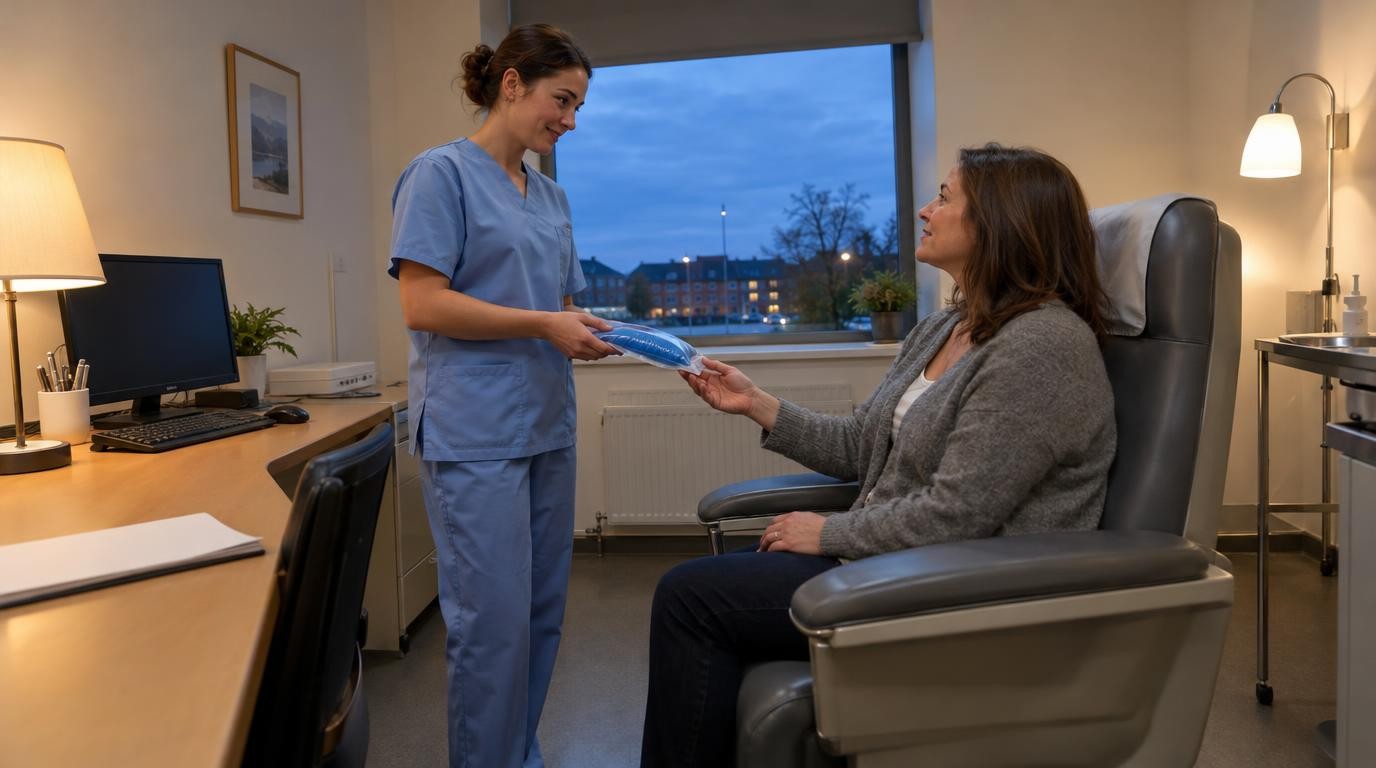
At Salisbury Plastic Surgery, you may go home after 2 hours once your doctor approves discharge, accompanied by an adult who can care for you. Arrange the escort before surgery and follow your postoperative activity instructions.
When Can You Return to Work and Normal Activities?
At Salisbury Plastic Surgery, we tell patients that getting back to usual activities can take 10 days to several weeks. Your job demands and pace of healing matter; strenuous activity may require a longer break than desk work. Follow the postoperative activity restrictions we give you.
When Are Sutures Removed?
At Salisbury Plastic Surgery, we generally remove brow lift sutures 1 week after surgery and check how the incisions are healing.
How Much Lift Can You Expect, and How Long Does It Last?
In Sibar, Dikmen, and Erdal’s systematic review and meta-analysis of long-term endoscopic brow lift stability, pooled long-term elevation ranged from 3.25 mm at the inner brow to 4.35 mm at the outer brow, while Salisbury Plastic Surgery estimates that brow lift results can last five to 10 years or longer. These pooled measurements and our duration estimate describe different outcomes; neither predicts your individual result. The amount of lift varies by brow region, anatomy, and technique, and research at later follow-up remains limited.
What Did the Long-Term Endoscopic Brow Lift Meta-Analysis Measure?
Published in Aesthetic Surgery Journal, Sibar, Dikmen, and Erdal’s review screened 5,324 articles and included 12 eligible studies involving isolated or combined endoscopic brow lift surgeries. The authors pooled measurements separately for the inner, middle, and outer portions of the brow. Their findings were averages across included studies, not targets for an individual operation.
The Sibar, Dikmen, and Erdal meta-analysis reported the following pooled long-term brow elevation:
| Brow region | Pooled elevation |
|---|---|
| Medial, or inner brow | 3.25 mm |
| Central brow | 3.86 mm |
| Lateral, or outer brow | 4.35 mm |
The authors emphasized the need for more objective long-term data, including information about different fixation methods. Their findings do not guarantee permanent elevation or a brow that stays at the same measured height over time.
When Should You Judge Your Final Result?
Swelling and healing can change the appearance of the brows after the early recovery period. At Salisbury Plastic Surgery, final brow lift results usually emerge after four to six months.
How Does an Endoscopic Brow Lift Compare With a Temporal Lift?
Endoscopic and temporal lifts address different areas; an open lift is another option when skin laxity is more significant. These are the main differences:
| Approach | Incisions and tissue adjustment | Concern it may address |
|---|---|---|
| Endoscopic | Short incisions behind the hairline; brow and forehead tissue repositioned without removing forehead skin | Drooping across the brow and forehead |
| Temporal or limited-incision | Incisions near the temples; outer-brow tissue repositioned | Mild to moderate droop concentrated at the outer brow, not the central brow |
| Open | A longer incision behind the hairline gives more direct access to forehead tissue | More significant sagging or skin laxity |
What Is the Procedure for a Temporal Lift?
Through incisions in the temple hairline, the surgeon lifts and repositions outer-brow tissue; some temporal techniques also remove a small amount of excess skin or scalp. Johns Hopkins Medicine’s brow lift overview notes that a temporal lift can be performed in an office under local anesthesia, though the setting and anesthesia depend on the surgical plan. The American Academy of Facial Plastic and Reconstructive Surgery’s brow lift overview notes that a temporal lift does not address the central brow.
Is a Temporal Brow Lift Worth It?
A temporal lift may be worth considering when the change you want is concentrated at the outer brow, but it is less well matched to central brow descent or forehead lines. The American Society of Plastic Surgeons’ comparison of brow and forehead lifts describes typical temporal-lift downtime of one to two weeks while swelling and bruising diminish enough for public activities. Weigh that recovery time and the limits of an outer-brow lift against the change you want, rather than assuming one technique is universally better.
Frequently Asked Questions
How long does endoscopic brow lift surgery take?
A brow lift generally takes 1 to 2 hours, according to the American Board of Cosmetic Surgery. That is an estimate for brow lift surgery, not a guaranteed time for an endoscopic procedure. The surgical plan and any combined procedures can change how long your operation takes.
How long does swelling last after a brow lift?
At Salisbury Plastic Surgery, we find that swelling typically begins to subside in the first few days and, for most patients, resolves by the end of the first week or within 10 days.
Can an endoscopic brow lift be combined with upper eyelid surgery?
Yes, an endoscopic brow lift can be combined with upper eyelid surgery when both brow descent and excess eyelid skin contribute to hooding. A brow lift repositions the brow and forehead; eyelid surgery addresses the eyelids themselves. We assess both areas before recommending one procedure or a combined plan.
Is there a nonsurgical alternative to an endoscopic brow lift?
Yes. At Salisbury Plastic Surgery, we offer neuromodulator injections for people seeking a small change without surgery; we may also recommend dermal fillers for related concerns. Using these injections specifically to lift the brow is off-label, and injections do not reposition forehead tissue the way surgery does. Botulinum toxin products carry a boxed warning that their effects can spread beyond the injection site, potentially causing serious swallowing or breathing problems. A known allergy to the product or an infection at the planned injection site rules out a botulinum toxin injection. Accidental injection of dermal filler into a blood vessel can cause tissue death, vision loss, or stroke.
What is the best age to get a brow lift?
There is no single best age for a brow lift. At Salisbury Plastic Surgery, we find that people often begin considering the procedure after age 45, but age alone does not determine candidacy. Brow position, skin elasticity, overall health, and your goals matter more when choosing an approach.
Can a brow lift lower a high hairline?
A pretrichial brow lift may lower a high hairline, but an endoscopic brow lift is not designed for that purpose. The American Academy of Facial Plastic and Reconstructive Surgery notes that a pretrichial lift places the incision at or just behind the hairline and removes a strip of skin and deeper tissue.
How Can You Decide Whether an Endoscopic Brow Lift Is Right for You?
Identify what causes the brow or eyelid heaviness, then compare each treatment’s likely change, limitations, and recovery with your goals. An endoscopic lift is one option, not the default for every drooping brow.
What Should You Ask at a Brow Lift Consultation?
- Which parts of my brow need correction, and is my eyelid heaviness caused by brow position, eyelid tissue, or both?
- Would an endoscopic, limited-incision, or open brow lift best fit my anatomy and goals?
- What visible change is realistic for me, and where would my incisions be?
- What help will I need at home, and which work and activity restrictions will apply?
- Would eyelid surgery, a facelift, laser skin resurfacing, or neuromodulator injections better address any concerns a brow lift will not correct?
In clinical practice, matching the procedure to the cause of a heavy-looking upper eye is more useful than choosing a technique by name alone. If you are considering a brow lift, contact Salisbury Plastic Surgery to arrange a consultation with Dr. Deborah Ekstrom in Corona del Mar, California. We can discuss your brow position, treatment options, and recovery plan in the context of your goals.
This information is general and is not medical advice. Talk to a licensed clinician about your own situation before making a treatment decision.