

Last updated: August 4, 2026
For many women dealing with stress urinary incontinence, the prospect of surgery has long felt like the only path to meaningful relief. A groundbreaking 2024-2025 comparative study published in a peer-reviewed medical journal is changing that assumption, demonstrating that Emsella – a non-invasive electromagnetic therapy – achieves efficacy comparable to traditional surgical anterior colporrhaphy. This research offers a compelling new option for women throughout Central Massachusetts, from Worcester to Shrewsbury, who want to address bladder control concerns without going under the knife.
Is Emsella as Effective as Surgery for Urinary Incontinence?
A prospective comparative study directly benchmarked HIFEM-based Emsella therapy against traditional surgical anterior colporrhaphy for stress urinary incontinence treatment. The research found comparable outcomes between the two approaches, establishing non-inferiority for efficacy while maintaining the non-invasive benefits of the electromagnetic treatment option.
What Did the New Comparative Study Find?
The study published through the National Institutes of Health database compared patients treated with Emsella against those who underwent standard anterior colporrhaphy surgery. Researchers measured outcomes across multiple parameters including improvement in bladder control, reduction in incontinence episodes, and patient satisfaction scores. The results demonstrated that Emsella therapy produced clinically meaningful improvements that were statistically comparable to the surgical intervention, giving patients a validated alternative that does not require anesthesia, incisions, or recovery time.
How Does HIFEM Technology Compare to Surgical Outcomes?
HIFEM (High-Intensity Focused Electromagnetic) technology works by inducing supramaximal pelvic floor muscle contractions that cannot be achieved through voluntary exercises alone. The electromagnetic field penetrates tissue selectively, targeting the pelvic floor musculature with precision. Unlike surgery, which repositions anatomical structures, Emsella strengthens the existing muscle tissue, addressing the underlying weakness that contributes to incontinence. The prospective comparative study confirmed that this muscle strengthening approach delivers outcomes on par with the structural repair achieved through surgical intervention.
What Do These Results Mean for Patients Near Worcester?
For women in Worcester County and surrounding communities including Auburn, Grafton, Holden, and Leicester, these findings represent a significant shift in treatment possibilities. Patients who have been considering surgical options can now explore a clinically validated alternative that fits into their daily lives without significant disruption. The research provides the evidence base that many patients and their healthcare providers have been seeking to confidently choose the non-invasive path.
How Does Emsella Work to Treat Urinary Incontinence?
Emsella utilizes HIFEM technology to stimulate deep pelvic floor muscle contractions, strengthening the musculature that supports bladder control. During a single 28-minute session, the device induces thousands of supramaximal contractions, equivalent to performing extremely intense Kegel exercises. This targeted stimulation addresses the root cause of stress urinary incontinence by building strength and endurance in the pelvic floor.
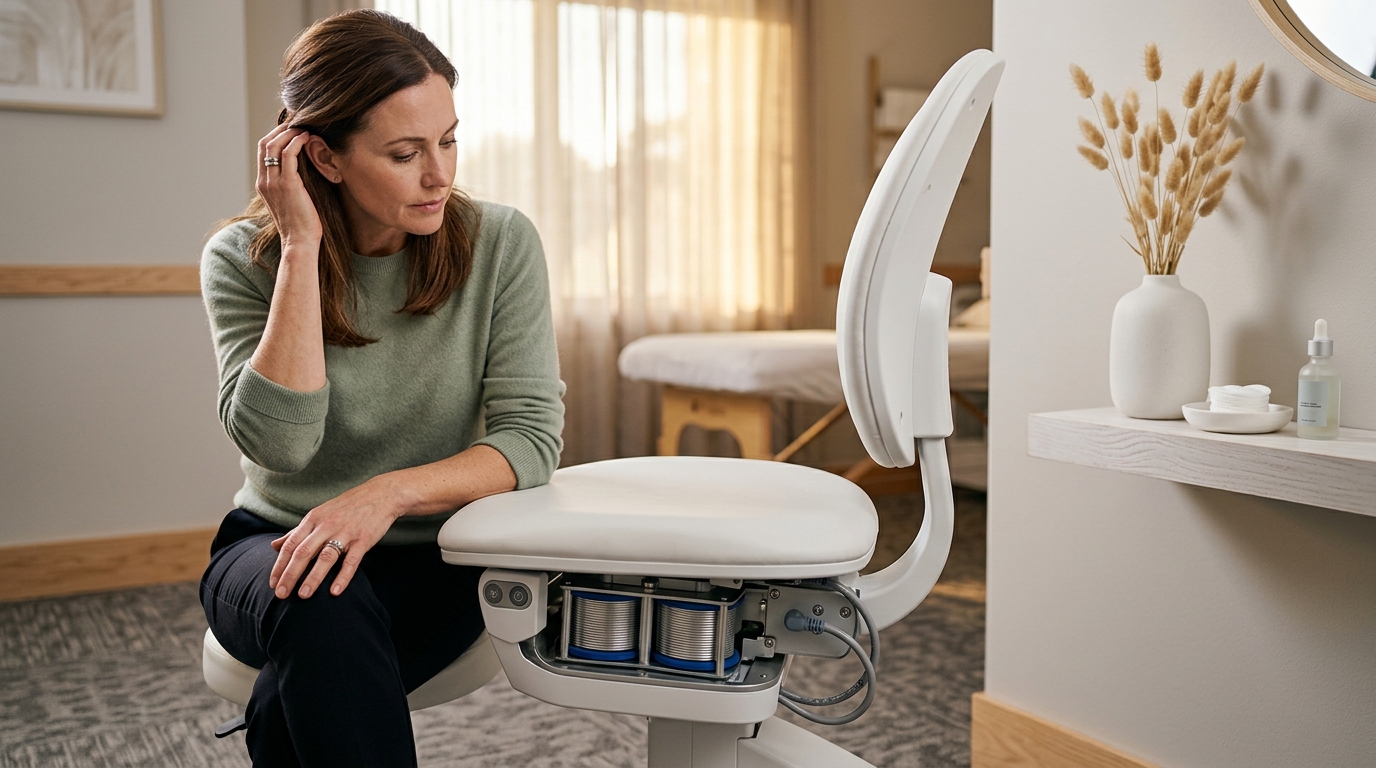
What Is HIFEM Technology and How Does It Strengthen Pelvic Muscles?
HIFEM technology delivers focused electromagnetic energy directly to the pelvic floor region without requiring the patient to remove clothing or undergo any invasive procedure. The electromagnetic field causes depolarization of motor neurons, triggering intense muscle contractions that engage both superficial and deep pelvic floor fibers. These contractions rebuild muscle tissue, increase muscle density, and restore the supportive function of the pelvic floor that prevents involuntary urine leakage during activities like coughing, sneezing, or exercise.
What Happens During an Emsella Treatment Session?
Patients remain fully clothed and seated comfortably in the Emsella chair while the device operates. The practitioner positions the patient appropriately and calibrates the intensity based on individual tolerance and treatment goals. Most patients describe the sensation as a series of intense tingling and pulling sensations as the pelvic floor muscles contract involuntarily. There is no pain, no recovery period, and no post-treatment restrictions. The entire session takes approximately 28 minutes, during which patients can read, watch content on their devices, or simply relax.
How Many Emsella Sessions Are Needed for Optimal Results?
Clinical protocols typically recommend a series of six sessions scheduled twice weekly over three weeks. Many patients begin noticing improvements after just two or three sessions, with optimal results typically achieved within a few weeks of completing the treatment series. The strength-building effects continue to develop as the muscle tissue remodels and strengthens over time. Patients interested in maintaining results may benefit from periodic maintenance sessions, similar to how fitness routines require ongoing commitment to preserve strength gains.
Who Is a Good Candidate for Emsella Treatment?
Emsella is designed for women experiencing stress urinary incontinence, urge incontinence, or mixed incontinence who prefer to avoid surgical intervention. Ideal candidates are those seeking a non-invasive solution that fits into busy lifestyles without requiring recovery time. Women in Central Massachusetts communities from Millbury to Paxton who want to address bladder control concerns while maintaining their daily routines represent the core patient population for this therapy.
Is Emsella Right for Women with Stress Urinary Incontinence?
Women with stress urinary incontinence – characterized by urine leakage during activities that increase abdominal pressure – represent an excellent candidate population for Emsella. This includes leakage triggered by coughing, sneezing, laughing, exercise, or lifting. The HIFEM technology specifically targets the pelvic floor muscles responsible for maintaining continence during these activities, making it a directly appropriate treatment for this condition. Clinical data indicates that up to 95% of Emsella users report improved bladder control following treatment, with many experiencing significant reductions in daily incontinence episodes.
Can Emsella Help If Surgery Hasn’t Worked for Incontinence?
Some patients who have undergone surgical intervention for incontinence may still experience residual symptoms or recurrence over time. Emsella offers these patients a non-invasive adjunct or alternative therapy that can address persistent muscle weakness that may contribute to ongoing symptoms. By strengthening the pelvic floor musculature, Emsella may complement surgical repairs or provide relief when surgical outcomes have been incomplete. Patients should discuss their surgical history during consultation to determine if Emsella is appropriate for their specific situation.
What Should You Discuss During an Emsella Consultation?
During a consultation at Salisbury Plastic Surgery, patients should openly discuss their incontinence symptoms, medical history, previous treatments, and personal goals. A thorough evaluation helps determine whether Emsella treatment or other treatment approaches best align with the patient’s needs. Dr. Deborah Ekstrom and the clinical team review factors including the type and severity of incontinence, any underlying medical conditions, medications, and lifestyle considerations. This individualized approach ensures patients receive appropriate recommendations for their specific circumstances.
What Results Can Patients Expect from Emsella Therapy?
Clinical outcomes from Emsella therapy demonstrate substantial improvements in bladder control and quality of life measures. Studies show that the majority of treated patients experience meaningful reductions in incontinence episodes and report high satisfaction with treatment results. The non-invasive nature of the therapy does not compromise its effectiveness, making it a compelling option for appropriate candidates.
How Quickly Do Patients Notice Improved Bladder Control?
Many patients report noticing improvements after just two or three Emsella sessions, with progressive enhancement throughout the treatment course. Initial changes may include reduced urgency, fewer leakage episodes, and increased confidence during daily activities. The full treatment protocol allows for continued strengthening, with optimal results typically apparent within a few weeks of completing the initial series. Patients often describe the experience as gradually regaining control and freedom they had previously taken for granted.
What Percentage of Emsella Users Report Improvement?
Clinical data consistently demonstrates strong efficacy for Emsella therapy. Provider-reported outcomes indicate that approximately 95% of patients experience improved bladder control following treatment. Additionally, a clinical trial evaluating Emsella for overactive bladder has contributed to the growing body of evidence supporting HIFEM therapy for various forms of urinary incontinence. These statistics reflect significant clinical improvement rather than just minor changes, making Emsella a reliably effective treatment option for appropriate candidates.
How Long Do Emsella Results Last?
Results from Emsella therapy are long-lasting, with many patients enjoying sustained improvements for a year or longer before considering maintenance sessions. The muscle strengthening achieved through HIFEM technology represents genuine physiological changes that persist beyond the treatment period. Individual factors including age, activity level, and overall health influence how long results are maintained. Patients who incorporate healthy lifestyle practices and periodic pelvic floor awareness into their routines often maximize the longevity of their treatment outcomes.
Why Choose Emsella Over Surgical Incontinence Treatment?
Emsella offers a compelling alternative to surgical intervention for stress urinary incontinence, combining clinical effectiveness with convenience and comfort. The ability to address pelvic floor weakness without incisions, anesthesia, or recovery time distinguishes this technology as a patient-friendly option that does not compromise on results. For women throughout the Worcester area, from Boylston to West Boylston, this represents a treatment approach that respects both their health goals and their busy lives.

What Are the Advantages of a Non-Invasive Treatment Approach?
Non-invasive treatment eliminates surgical risks including infection, bleeding, anesthesia complications, and adverse reactions to implanted materials. There is no incision, no scarring, and no hardware placed in the body. The HIFEM technology achieves its results entirely externally, making it accessible to patients who may not be surgical candidates due to health conditions, medications, or personal preferences. This safety profile, combined with comparable efficacy to surgery, makes Emsella an attractive first-line option for appropriate patients.
Is There Downtime or Recovery After Emsella Sessions?
Emsella requires no downtime whatsoever. Patients can return to normal activities immediately following each session, including work, exercise, and family obligations. This stands in stark contrast to surgical incontinence treatment, which typically involves weeks of activity restrictions and recovery. The ability to schedule treatments during a lunch break or between other commitments makes Emsella practical for women who cannot afford to take time away from their responsibilities. The treatment is truly designed to fit into real life rather than requiring life to accommodate the treatment.
How Does Emsella Fit Into a Busy Lifestyle in Massachusetts?
For women throughout Central Massachusetts communities including Shrewsbury, Millbury, Holden, and the surrounding areas, Emsella offers treatment that adapts to their schedules rather than demanding significant time investment. Each 28-minute session can be combined with other appointments or activities, and there are no post-treatment restrictions to plan around. The twice-weekly schedule over three weeks is manageable even for busy professionals, parents, and active retirees who want effective incontinence treatment without the lifestyle disruption of surgery.
Ready to Explore Your Incontinence Treatment Options?
For women in Worcester, Auburn, Grafton, and throughout Central Massachusetts seeking effective treatment for stress urinary incontinence, Emsella offers a clinically validated alternative to surgery. Salisbury Plastic Surgery provides this innovative HIFEM therapy in a comfortable, professional setting, helping patients regain confidence and control without invasive procedures. If you are interested in learning whether Emsella is right for your needs, the experienced team at Salisbury Plastic Surgery welcomes the opportunity to discuss your options during a personalized consultation.
Frequently Asked Questions
How effective is Emsella compared to surgery for urinary incontinence?
A 2024-2025 peer-reviewed comparative study found Emsella achieves efficacy comparable to traditional surgical anterior colporrhaphy. The research established non-inferiority between the HIFEM-based therapy and surgery, demonstrating statistically comparable improvements in bladder control, reduction in incontinence episodes, and patient satisfaction scores. Patients can now choose a non-invasive option backed by clinical evidence.
How does Emsella work to treat urinary incontinence?
Emsella uses HIFEM (High-Intensity Focused Electromagnetic) technology to induce supramaximal pelvic floor muscle contractions that cannot be achieved through voluntary exercise alone. During a 28-minute session, the device stimulates thousands of intense contractions, strengthening the pelvic musculature that supports bladder control. This addresses the underlying muscle weakness causing stress urinary incontinence without any invasive procedure.
How many Emsella sessions are needed to see results?
The standard clinical protocol recommends six sessions scheduled twice weekly over three weeks. Many patients begin noticing improvements after just two or three sessions, with optimal results typically achieved within a few weeks of completing the treatment series. The muscle-strengthening effects continue developing as tissue remodels and strengthens over time.
What are the main advantages of choosing Emsella over surgery?
Emsella eliminates surgical risks including infection, bleeding, and anesthesia complications since no incisions or anesthesia are required. Patients remain fully clothed during treatment and return to normal activities immediately after each 28-minute session. There is no recovery period, no scarring, and no post-treatment restrictions, making it practical for busy women who cannot afford lifestyle disruption.
How long do Emsella treatment results last?
Emsella results are long-lasting, with many patients enjoying sustained improvements for a year or longer before considering maintenance sessions. The muscle strengthening achieved represents genuine physiological changes that persist beyond the treatment period. Individual factors including age, activity level, and overall health influence longevity, and healthy lifestyle practices can help maximize treatment outcomes.
What percentage of patients see improvement after Emsella treatment?
Clinical data shows approximately 95% of Emsella users report improved bladder control following treatment. Patients experience meaningful reductions in incontinence episodes and high satisfaction with results. Initial improvements may include reduced urgency and fewer leakage episodes, with progressive enhancement throughout the treatment course leading to restored confidence in daily activities.